First Product

First Product

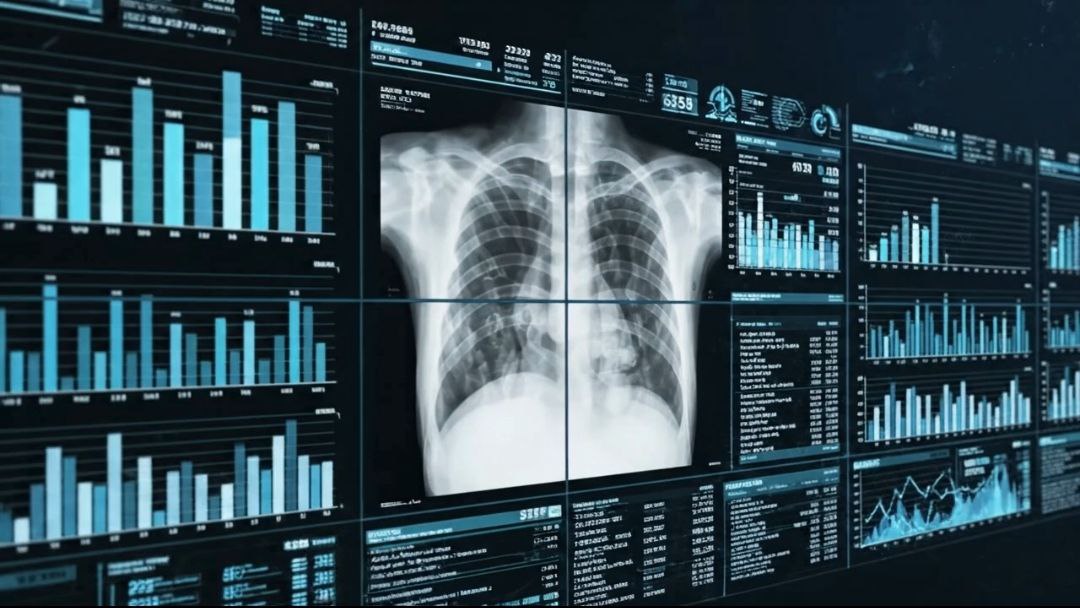
We Introduce KurdRay

Dive into our advanced chest x-ray classification AI with Amazing features

KurdRay

Jan 1, 2026

An AI-Powered Radiology Intelligence Platform for Chest X-ray Diagnosis and Clinical Decision Support

Medical imaging lies at the core of modern clinical decision-making, yet radiology departments worldwide face increasing workloads, reporting delays, and diagnostic fatigue. Chest X-rays (CXR), one of the most frequently performed imaging studies, require rapid and accurate interpretation to guide timely patient management.


SahaNova was developed to address this challenge by combining state-of-the-art deep learning with an interactive clinical AI agent, creating an end-to-end intelligent radiology assistant. Rather than replacing clinicians, SahaNova acts as a second reader and clinical companion, enhancing accuracy, speed, and decision confidence.

widget pic

How the KurdRay Model Works

At the core of KurdRay is a multi-label deep learning model designed to analyze chest X-ray images and detect abnormalities with high precision.

Model Architecture


  • Built using DenseNet121, a proven architecture for medical image analysis

  • Optimized for multi-disease classification, allowing detection of multiple abnormalities in a single image

  • Trained to recognize 14 clinically significant chest X-ray findings


To further improve performance and robustness, the system employs an ensemble approach, combining predictions from two independently trained advanced models. This ensemble strategy reduces variance, improves generalization, and delivers more stable predictions across diverse image conditions.


Training Strategy

  • Phase 1 Training

    • Trained on 100,000+ chest X-ray images

    • Curated from large, well-established medical imaging datasets

    • Extensive preprocessing, normalization, and augmentation applied


  • Advanced Training Techniques

    • Class imbalance handling to improve rare disease detection

    • Optimized loss functions for multi-label classification

    • Rigorous validation and benchmarking


This approach enabled KurdRay to reach a state-of-the-art AUC of approximately 0.87, comparable to leading international AI systems in chest radiography.

Instant, Real-Time Chest X-ray Analysis

One of KurdRay's defining strengths is speed.

  • Upload a chest X-ray

  • Receive results instantly

  • No waiting time, no processing delays


The system is optimized for real-time inference, making it suitable for emergency departments, outpatient clinics, and high-volume radiology workflows.

Detected Chest X-ray Abnormalities

SahaNova currently detects 14 major chest X-ray abnormalities, including but not limited to:

Pneumonia, Cardiomegaly, Pleural Thickening, Atelectasis, Pulmonary edema, Fibrosis, Pneumothorax, Infiltration, Mass, Nodule, Hernia, Emphysema, Consolidation, Effusion.

The model supports multi-label detection, meaning multiple abnormalities can be identified in the same image when present.


Phase 2: Scaling Toward Clinical Excellence

KurdRay is actively evolving.

Ongoing Phase 2 Training

  • Expansion to 400,000+ chest X-ray images

  • Inclusion of broader patient demographics

  • Increased scanner and acquisition variability

  • Improved rare pathology representation


This phase aims to:

  • Further increase diagnostic accuracy

  • Improve robustness across institutions

  • Push performance beyond current benchmarks toward next-generation clinical AI


Beyond Diagnosis: The KurdRay Clinical AI Agent

KurdRay integrates a conversational AI agent, inspired by modern clinical reasoning systems, and seamlessly connected to the diagnostic engine.

How the Agent Works

After an abnormality is detected:

  1. The diagnosis is displayed to the user

  2. A dedicated option allows users to chat with the AI agent

  3. The agent understands the imaging findings and clinical context


What You Can Ask the Agent

  • Explanation of the detected abnormality


  • Patient preparation steps


  • Recommended next investigations


  • Initial management and treatment considerations


  • Differential diagnoses


  • Follow-up and monitoring advice


This transforms KurdRay from a diagnostic tool into a clinical decision support assistant, bridging imaging findings with real-world medical workflows.

Web-Based, User-Centered Design

KurdRay is delivered as a modern web-based application:

  • Simple and intuitive interface

  • Upload X-ray → get diagnosis → interact with AI agent

  • Designed for use on desktops, tablets, and clinical workstations

  • Ready for integration into existing hospital systems

Safety, Responsibility, and Clinical Role

KurdRay is designed with patient safety at its core:

  • AI outputs are assistive, not definitive diagnoses

  • Final clinical decisions remain with qualified healthcare professionals

  • The system supports, not replaces, medical expertise
KurdRay

Jan 1, 2026

An AI-Powered Radiology Intelligence Platform for Chest X-ray Diagnosis and Clinical Decision Support

Medical imaging lies at the core of modern clinical decision-making, yet radiology departments worldwide face increasing workloads, reporting delays, and diagnostic fatigue. Chest X-rays (CXR), one of the most frequently performed imaging studies, require rapid and accurate interpretation to guide timely patient management.


KurdRay was developed to address this challenge by combining state-of-the-art deep learning with an interactive clinical AI agent, creating an end-to-end intelligent radiology assistant. Rather than replacing clinicians, KurdRay acts as a second reader and clinical companion, enhancing accuracy, speed, and decision confidence.

widget pic

How the KurdRay Model Works

At the core of KurdRay is a multi-label deep learning model designed to analyze chest X-ray images and detect abnormalities with high precision.


Model Architecture

  • Built using DenseNet121, a proven architecture for medical image analysis


  • Optimized for multi-disease classification, allowing detection of multiple abnormalities in a single image


  • Trained to recognize 14 clinically significant chest X-ray findings


To further improve performance and robustness, the system employs an ensemble approach, combining predictions from two independently trained advanced models. This ensemble strategy reduces variance, improves generalization, and delivers more stable predictions across diverse image conditions.


Training Strategy

Phase 1 Training

  • Trained on 100,000+ chest X-ray images


  • Curated from large, well-established medical imaging datasets


  • Extensive preprocessing, normalization, and augmentation applied


Advanced Training Techniques

  • Class imbalance handling to improve rare disease detection


  • Optimized loss functions for multi-label classification


  • Rigorous validation and benchmarking


This approach enabled KurdRay to reach a state-of-the-art AUC of approximately 0.87, comparable to leading international AI systems in chest radiography.


Instant, Real-Time Chest X-ray Analysis


One of KurdRay's defining strengths is speed.


  • Upload a chest X-ray


  • Receive results instantly


  • No waiting time, no processing delays


The system is optimized for real-time inference, making it suitable for emergency departments, outpatient clinics, and high-volume radiology workflows.


Detected Chest X-ray Abnormalities

Kurdray currently detects 14 major chest X-ray abnormalities, including but not limited to:


Pneumonia, Cardiomegaly, Pleural Thickening, Atelectasis, Pulmonary edema, Fibrosis, Pneumothorax, Infiltration, Mass, Nodule, Hernia, Emphysema, Consolidation, Effusion.


The model supports multi-label detection, meaning multiple abnormalities can be identified in the same image when present.


Phase 2: Scaling Toward Clinical Excellence

KurdRay is actively evolving.

Ongoing Phase 2 Training

  • Expansion to 400,000+ chest X-ray images


  • Inclusion of broader patient demographics


  • Increased scanner and acquisition variability


  • Improved rare pathology representation


This phase aims to:

  • Further increase diagnostic accuracy


  • Improve robustness across institutions


  • Push performance beyond current benchmarks toward next-generation clinical AI


Beyond Diagnosis: The KurdRay Clinical AI Agent

KurdRay integrates a conversational AI agent, inspired by modern clinical reasoning systems, and seamlessly connected to the diagnostic engine.


How the Agent Works

After an abnormality is detected:

  1. The diagnosis is displayed to the user


  2. A dedicated option allows users to chat with the AI agent


The agent understands the imaging findings and clinical context

What You Can Ask the Agent

- Explanation of the detected abnormality

-Patient preparation steps

-Recommended next investigations

-Initial management and treatment considerations

-Differential diagnoses

-Follow-up and monitoring advice


This transforms KurdRay from a diagnostic tool into a clinical decision support assistant, bridging imaging findings with real-world medical workflows.

Web-Based, User-Centered Design

KurdRay is delivered as a modern web-based application:

  • Simple and intuitive interface


  • Upload X-ray → get diagnosis → interact with AI agent


  • Designed for use on desktops, tablets, and clinical workstations


  • Ready for integration into existing hospital systems

Safety, Responsibility, and Clinical Role

KurdRay is designed with patient safety at its core:

  • AI outputs are assistive, not definitive diagnoses


  • Final clinical decisions remain with qualified healthcare professionals


  • The system supports, not replaces, medical expertise